LGBTQ(IA)+ History Month 2022-Time for Reflection
By Carly Lovedawn
In February’s edition of our Wellbeing Newsletter Carly Loveland celebrates LGBTQ(IA)+ History Month 2022 with an explorative piece about identity, society and just how much, and how little, has changed in our short history for the LGBTQ(IA)+ community.
In honour of our LGBTQ(IA)+ colleagues and service users, we wanted to mark this LGBTQ(IA)+ History Month 2022 by taking the time to reflect – on how far we’ve come as a society and on how far we’ve yet to go, to ensure resources, services, and spaces are equal and accessible for all. In this article, we’ll briefly look at prominent figures in history and touch on the significant issues still facing LGBTQ(IA)+ people in the UK today, particularly in a mental health and wellbeing setting. We’ll round off with an update on what the wellbeing team is doing to improve equality, diversity, and inclusion (EDI) across our groups.
It might be hard for many to imagine now, but in the not-so-distant past homosexuality was a criminal offence. We need only look to the middle of the last century to find prominent figures such as Alan Turing, who undoubtedly helped the allies win the Second World War, prosecuted for engaging in “homosexual acts”. Turing was offered a choice of punishments, a prison sentence or chemical castration, of which he chose the latter. He died two years later in 1954 of a suspected suicide, branded as a criminal.
Though “homosexual acts” were decriminalised in England and Wales in 1967, men were still being prosecuted for “crimes” related to homosexuality well into the proceeding decades. In 2013, Turing was posthumously pardoned by the Queen, which inspired the creation of the ‘Turing Law’ in 2017, aimed at expunging the criminal convictions of men charged with homosexual-related “crimes”. As of 2019, less than 200 living men have been pardoned out of an estimated 15,000 who were eligible. As criminal convictions prevent access to many jobs and services, this historical legislation and the unjust application of the law have enduring, devastating effects on people’s lives.
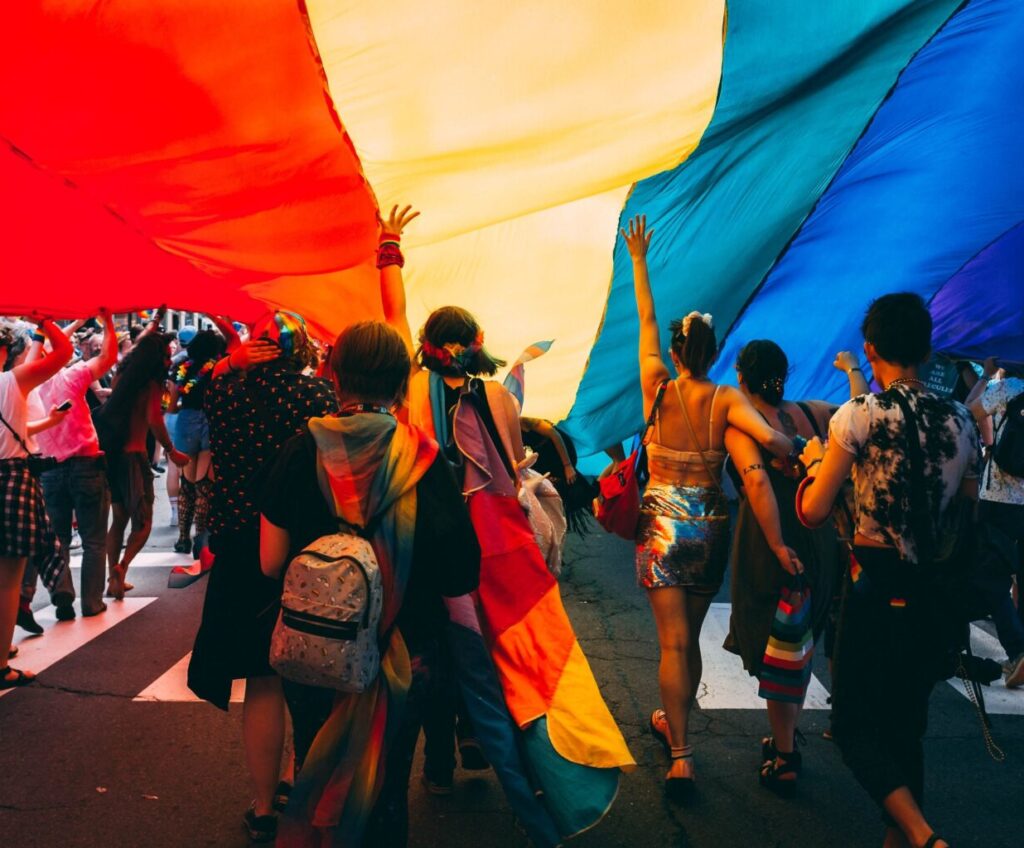

LGBTQ(IA)+ is an inclusive acronym meaning lesbian, gay, bisexual, trans-, queer, intersex, and asexual, plus any other ‘queer’ identity that is not encompassed by the full acronym. The term queer will be used in this article to refer to some or all LGBTQ(IA)+ identities.
No matter how important these issues are for men, it is critical that the conversation of LGBTQ(IA)+ and the shared history is not dominated by men; as historically it has been, and in many spheres still is, with research, activism, and groups largely dedicated to gay men’s issues. Women, trans- people, nonbinary people, people of colour, people with disabilities, and those who identify outside of ‘lesbian or gay’ are often overlooked.
Being overlooked has had its advantages in the past. Relationships and intimate acts between women have never been illegal in the UK. Indeed, in the Victorian era publicly intimate relationships between women were fairly common. In the late 1800s and early 1900s, women were believed to be asexual and ‘lacking the desires of men’ so no one batted an eyelid when many ‘independent’ women engaged in close friendships with one another, held hands, kissed, lived together, shared their finances, and never got married (in the eyes of the law). However, invisibility is not without its costs.
Being denied an identity, the space to speak, and the power to enact change in society has only further marginalised already marginalised people. Arguably, this invisibility has contributed to the current lack of awareness, acceptance, and recognition of the broader queer population in our society today.
Perhaps it’s easy to forget that we’ve come a long way in such a short time, but this is only with the tireless efforts of countless people working hard, fighting for human rights and equal treatment. But we also have a long way to go, to ensure everyone has the same rights, opportunities, support, and safety no matter who they are. For those in doubt that LGBTQ(IA)+ human rights are breached, and equal treatment is not a given, we need only look at the rising hate crimes against queer and trans- folks across the UK, fuelled by the transphobic statements of influential public figures and prejudiced media outlets.
We can also turn to mental health statistics, where it’s easy to see that all things are not equal. According to a study by Stonewall UK, over half of LGBTQ(IA)+ people have experienced depression or anxiety, far higher than the national estimates of 1 in 4. Many young LGBTQ(IA)+ people have made attempts to take their lives (1 in 8 aged 16-24) and more than half of trans- people have thought about taking their life. These higher rates of poor mental health are seen across all minority populations in Britain. The main reason suggested for these higher rates is related to added stresses that minority populations face every day – bias, prejudice, discrimination, inaccessible healthcare, hiding their true selves, and being at a greater risk of social isolation.
In 2020 the Home office found a continued increase in hate crimes committed against LGBTQ(IA)+ people: sexual-orientation hate crimes increased by 19% and transphobic hate crimes increased by 16%
That’s why it is vital to create safe inclusive spaces in services such as ours, so everyone can be themselves, open-up about their issues without facing judgement, and get the necessary support to cope with and recover from mental health difficulties. With this in mind, the wellbeing team have put together an equality, diversity, and inclusion training package that will be delivered across all our wellbeing groups. The training is optional, but we hope that everyone can understand why it is essential to provide this training and that all our service users will want to get involved – to make our groups safe, accessible, and supportive for all.
If you’d like to find out more, please check out the sources and further reading section below. We encourage everyone to become an LGBTQ(IA)+ ally-in-training. Allyship is the act of supporting minoritised people; believing them, responding to them non-judgmentally, and aiding them in their fight for equality. To be an ally we need to listen, learn, and speak up. We hope you join us.
Did you enjoy this piece? Why not sign up to our Wellbeing Newsletter!
Each monthly we share a round-up of updates and news related to Tyneside and Northumberland Mind and our Wellbeing Groups, feature sneak-peaks of what attendees get up to in groups, staff written articles on some powerful topics (just like this one) and a selection of fun and unique tips and hints to practice positive mental wellbeing in your daily life!
Sign up for all this and more here
Sources + Further Reading
https://www.bbc.co.uk/news/uk-49730231 (Turing Law + “homosexual crimes”)
https://www.history.com/news/women-got-married-long-before-gay-marriage (Victorian women)
https://mollybrown.org/queer-in-the-age-of-the-queen-gender-and-sexuality-of-the-mid-modern-period-in-victorian-england-and-north-america/ (Victorian women)
https://eachother.org.uk/stories/im-a-woman-deal-with-it/ (Christine Goodwin)
https://eachother.org.uk/transgender-awareness-week-15-inspiring-figures-in-the-uk-and-beyond/ (Key trans- folk)
https://www.theguardian.com/uk-news/2021/aug/29/spate-of-attacks-across-uk-sparks-fear-among-lgbtq-community
https://www.them.us/story/transphobia-surge-endangering-trans-people-uk (stories on hate crime)
https://www.instagram.com/fitfitxander/?hl=en (examples of hate crimes)
https://www.mentalhealth.org.uk/statistics/mental-health-statistics-lgbtiq-people (MH statistics)
https://www.stonewall.org.uk/system/files/lgbt_in_britain_health.pdf (Stonewall Health Report)
