Be Proud of your Pronouns
By Carly Lovedawn (she/her, they/them)
Everyone has and uses pronouns.
Pronouns are how we talk to, and about, each other:
“She is running in a competition this weekend.”
“He is looking after the children.”
“They are going to make a cake to celebrate.”
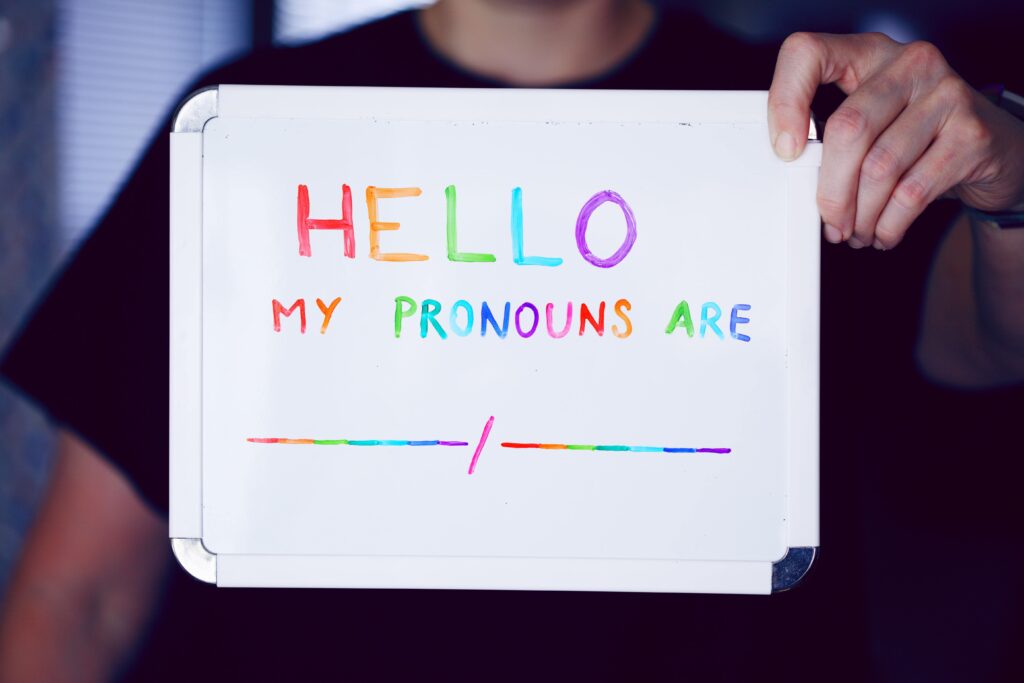
For most people, pronouns are something they inherited and just don’t question. Perhaps their pronouns don’t seem important or don’t cause them much concern. Most people are lucky (privileged) – they identify with the pronouns and gender they were given at birth, based on their sex-organs. In other words: he for a baby with a penis, she for a baby with a vulva. Even intersex babies (born with a combination of male and female sex-organs) are regularly given one of two (binary) genders and sets of pronouns at birth. But some people don’t identify with what they were given at birth, their gender or pronouns don’t fit, so they question what’s right for them.
Pronouns are fundamental to how we interact with and understand each other. Unfortunately, pronouns communicate a lot of hidden (error-prone) information about gender; what someone will look like, what they might wear, what kind of personality they have, what kind of job they might do, likes, dislikes, how they might procreate, and so on. For some people, the expectations and hidden information about their gender do not align with how they feel about themselves. In this case someone may be upset by the gender and pronouns they were given at birth; ranging from feeling uncomfortable to being highly distressed.
People who don’t identify with the gender or pronouns they were given at birth may choose to use different pronouns. He instead of she, she instead of he, they instead of he or she, or another “neopronoun” like ze or xe that are gender-neutral. The choice to change one’s pronouns is the individual’s alone. If someone has changed their pronouns, or identifies with more than one set, then it is likely that person will become distressed if someone uses the wrong ones – intentionally or unintentionally.
The most likely consequence of misgendering someone this way is an increase in the likelihood of mental ill health. Misgendering someone invalidates their experience and identity; it communicates to them that their view or feelings are unimportant, leading to feelings of isolation, loneliness, and low self-worth.
Everyone can help by being proud of their pronouns. Whether you identify with the gender and pronouns you were given at birth or not, you can help by normalising the way we talk about pronouns. Here are a couple of tips to help you be proud of your pronouns.Introduce yourself with your pronouns. “Hi I’m Jo, she/her”Display your pronouns on digital profiles and on your email at work.Jo Bloggs (she/her)Ask for someone’s pronouns when you first meet them. If they don’t know what you’re talking about, it’s a chance to politely educate.No-one is perfect! If you get it wrong apologise and try again with the correct pronouns. Don’t dismiss your mistake or get defensive.
Educate yourself on the use of pronouns (see sources below). If you doubt the validity of people’s use of pronouns, know this:
For you to use different words causes you no harm.
For you to use the wrong words causes no end of harm.
Sign up to our Wellbeing Newsletter
This post has been taken from our June newsletter, a celebration of Pride and the importance of recognising the LGBTQ(IA)+ community and taking steps to better society. Our monthly e-newsletter is a round-up of updates and news related to Tyneside and Northumberland Mind and our Wellbeing Groups, featuring sneak-peaks of what attendees get up to in groups, staff written articles on some powerful topics (like this) and a selection of fun and unique tips and hints to practice positive mental wellbeing in your daily life!
Sign up for all this and more here
