Beyond the Shoreline
A healing journey of endurance, adventure, and unexpected love.
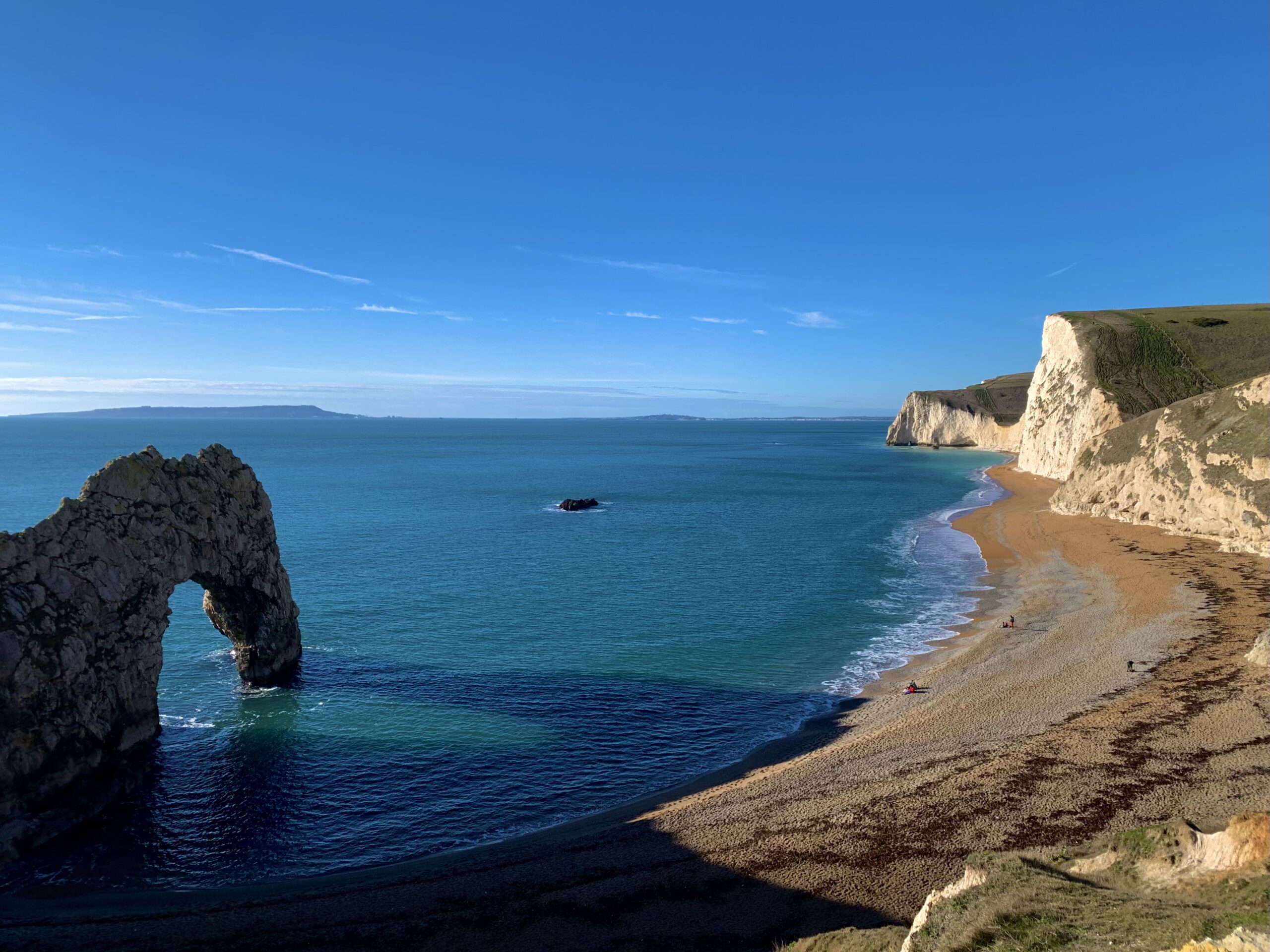
Two years ago James set about walking the coast of Britain for Mind, now three months post-challenge he reflects on his experience pushing the limits of his body physically and mentally and the transformative impact this journey of recovery has had on his life.
The following story is told by James and acts as a follow up to his accounts written for Mind, before and after his 6,600 mile healing, fundraiser challenge. You do not need to have read either to understand this story, however you can read all articles below. All photos were taken by James during his coast to coast walk of Britain.
Trigger Warning: Brief mentions of Suicide
Written by James
When I set out to walk the coast of Great Britain, I was certain that all my past trauma was resolved. Through two years of prioritising self-care after suffering a breakdown, I felt better than ever before. The breakup with my ex that had been the catalyst for my unravelling was all in the past. I had recovered from the anxiety and depression and any other feelings that it caused.
At the time, I thought my dream of walking the coast of Great Britain was an attempt to escape my problems. Only when the dream remained in my recovery did I realise it was leading me towards something better. It called me to the edge of the land I called home and to the peripheries of who I knew myself to be. I wanted to connect more deeply with myself, others, and the landscape. I wanted to find a sense of belonging that had eluded me all my life. I thought this walk was a new beginning, but the past would confront me in ways I couldn’t have imagined, presenting me with a stark choice.
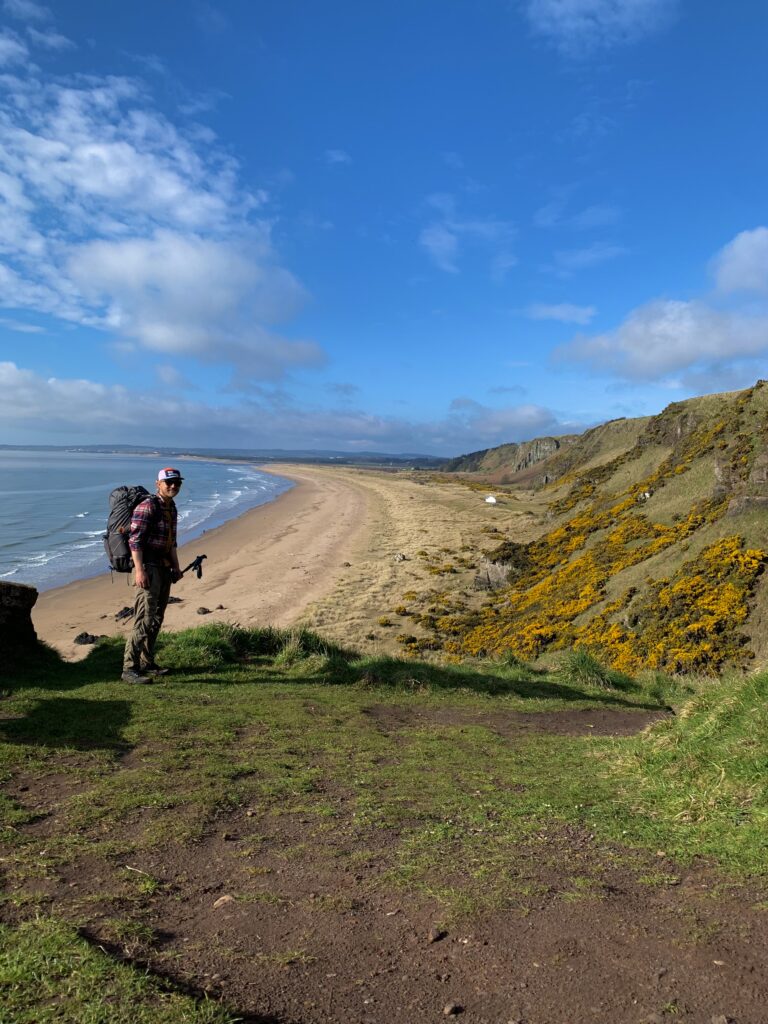
Reprioritising my selfcare and reconnecting with my needs in the present moment — food, water and warm clothing — soon had me moving forwards. All I had to do was take one step at a time.
The reality of the walk quickly hit home on the second day when a terrible storm soaked me through. On the third night my tent began letting in water, and the groundsheet would later rip and cause my shelter to lose all structural integrity. Being wet and cold without shelter so early into my year-long journey was terrifying. I was overwhelmed by my situation, suddenly panicked and doubtful about my life choices. My mind was trying to walk the entire coast and anticipate every problem in that single moment, and it was sending me into a tail spin. But I had learned through my recovery those feelings arose in me when I was stressed, tired, hungry or thirsty. Reprioritising my selfcare and reconnecting with my needs in the present moment — food, water and warm clothing — soon had me moving forwards. All I had to do was take one step at a time.
The more rainstorm-soaked clothes and collapsed tents I persevered through, the more quietly confident I became in my ability to handle it. I was living my dream, overcoming adversity, witnessing beautiful coastline and meeting incredible people, but there were also emotions rising in me that didn’t make sense. The daily fatigue of walking churned up feelings that had no conscious source. A tidal melancholy would wash over me, swelling up in my eyes only to recede in time. There was also anger for my ex too, whose leaving me suddenly had triggered the unravelling of my fragile mental state.
Despite my best efforts, our relationship had been volatile and insecure, and she could stray between love and cruelty. It had inflamed the feelings of worthlessness I harboured for myself, confirming that I needed to be someone else to be loved. These feelings had led me to a dark place.
There was a deeply rooted rage for how I had been treated during the relationship, through the breakup, and everything that came afterwards. I found myself rehearsing a self-righteous speech to recite if I ever saw her again, so she would know the pain she caused. I kept trying to rationalise the feelings away: it was in the past, there was nothing that could change it, and looking back, our separation was the right decision.
As Epictetus once said, “Another person will not hurt you without your cooperation; you are hurt the moment you believe yourself to be.”
But I couldn’t let the anger go.
While that rage came in waves, I was having doubts about my current relationship. I was seeing a lovely woman I met on a dating app while recovering from my breakdown. But the more I learned about myself and my needs, fully embracing who I was through the walk, the more I realised my partner wasn’t right for me.The curious thing was that in many ways, she reminded me of the person I was trying to be with my ex; someone who tried to be perfect, to meet the expectations of others, and who drank to annihilate those feelings of discomfort. We had fun, but it never felt much more than that. It could feel surface level, like she was hiding something or wasn’t being genuine. As much as I cared about her, it gave me nothing to make a genuine connection with.
It was horrible to break up with my partner, and I cried a lot knowing I was going to hurt her. But I also knew she wasn’t right for me, just as my ex had felt about me. Separating from my partner was a part of letting go to move forwards, but what I encountered next almost unravelled me.
Walking in aid of Mind, I had many conversations with people about mental health. Listening to people tell their stories with such openness and bravery encouraged me to speak about mine, too. There wasn’t a single person I spoke to who hadn’t experienced what I used to call ‘struggles’ and would later call ‘illness’.
The true extent of the mental health crisis confronted me when I came across a woman about to take her life.I knew something was wrong when she moved into a dangerous position. I had to help her, so after I waved and she waved back, I tried to intervene. She told me her suicidal intentions, and through a desperate conversation I tried command her not to go through with it. It was only when I told her I knew how she felt that she stopped and looked at me directly. That moment could have lasted an eternity.
It was the inevitable terminus of self-loathing and self-neglect that isolates you from everything.
I knew the disembodied voice she could hear telling her she was worthless and that taking her life was the only option left. I knew that loud and commanding voice because my anxiety and depression had spiralled into suicidal thoughts. It was the inevitable terminus of self-loathing and self-neglect that isolates you from everything.
Those thoughts had terrified me into making radical changes in my life, to prioritising self-care and putting my well-being over anything else. It had changed my life, but my life could have just as easily ended, a choice I feared the woman would take. Telling her I had felt the same disrupted her suicidal intention long enough for her to agree to come with me to safety.
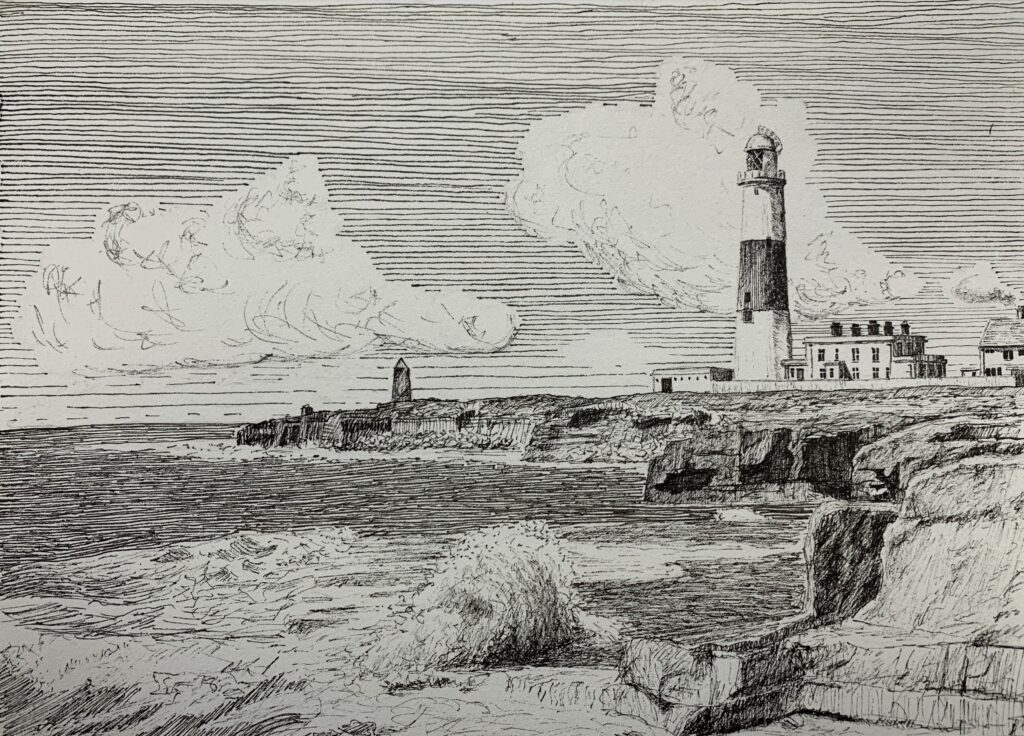
Those thoughts had terrified me into making radical changes in my life, to prioritising selfcare and putting my wellbeing over anything else. It had changed my life, but my life could have just as easily ended, a choice I feared the woman would take. Telling her I had felt the same disrupted her suicidal intention long enough for her to agree to come with me to safety.
Thankfully a local crisis team intervened, because I was unequipped for the situation and starting to crack. I stayed with her for an hour while emergency services arrived, all the while feeling an overwhelming grief surging in my throat.
When she was taken away and I was alone, I burst into tears, sobbing uncontrollably. It felt as though I had been holding my breath for an hour, a week, months, years. It wasn’t just grief for the woman I was feeling, but for myself who had felt suicidal, who had hated himself, felt broken and alien for so many years. It felt like a huge part of me had dislodged and fallen away, changing the shape of myself. I was hollow for weeks, and unable to cope with it.
The day after the incident, I found myself at the bottom of my second pint in Wetherspoons, alone and drunk. I couldn’t stop thinking about the woman I had ‘saved’. I prevented her death, but I had failed to dissuade her from suicidal intention, and it was a failure that worried me deeply. After the second pint, I realised what I was doing and left. After my breakdown years earlier, I had given up alcohol, making me realise how much I used it to numb overwhelming feelings. Remembering drinking was a coping mechanism was enough to not let it take hold of me, returning to the self-care of walking, rest and good food that had been the antidote.
Then a conversation with a stranger helped me understand why I had struggled so much. I spoke on Sky News about my walk and preventing a death, which had an incredible response. One of the people who contacted me was James, who suggested we meet along the way.
When we met, we spoke about mental health, and his recent diagnosis with ADHD and autism. His struggles with his neurodivergence, anxiety, depression and drinking to cope resonated so clearly with my own experience of mental health. James suggested I take the same preliminary tests that he had, and the results showing it was highly probable that I too had ADHD and autism.

It helped me realise that the traits I had once thought made me dysfunctional or broken, simply meant I functioned differently. It was a difficult medley that, in my experience, made self-care and relationships challenging. My addictive tendencies were a means of seeking dopamine for my overwhelmed, dopamine depleted brain.
There was some comfort in a diagnosis and having that shared experience…It helped me to further understand who I am
There was some comfort in a diagnosis and having that shared experience with James. It helped me to further understand who I am, and the conversation drew light on a behaviour I hadn’t realised was so common to neurodivergence. I didn’t realise the extent of my coping mechanisms. I had found myself going on dating apps looking for something casual, just as I had done in the time after my breakdown. It was another way to try and numb the pain with pleasure. But it wasn’t the type of deep meaningful connection I really sought in myself, in others or in nature. I wanted to meet someone and find belonging, but with my doing the walk, always walking away from people, it seemed impossible.
After a week on the apps, I deleted them, letting go of this coping mechanism and any expectation of meeting the right person for me. That was when I met Abi. I had met Abi’s friend Vikki by chance while walking through Cornwall. Vikki put me in touch with Abi when I made it around to Norfolk, who invited me for breakfast where she worked. I was immediately attracted to her, having a goofy conversation about birds over ordering food. In a moment of stillness watching her serve customers, I thought, there’s someone I could share my life with. It was a thought I had never had before about anyone.
Abi had a daughter, so I assumed a partner also. But I had also just made a pledge to stop searching for someone and prioritise my self-care. Little did I know that Abi felt the same way. So we said goodbye and I continued walking north.

With focusing on selfcare, I allowed myself to feel the grief and the anger I had been feeling, and with time, they began to fade. Like the coastline I walked, I felt the edge of myself changing, areas of me falling away while others grew. The further I walked, the quieter my mind became, until I spent much of the day thinking very little at all. It was peaceful, but that changed when I crossed the border into Scotland and received an unexpected message from my ex. By coincidence, she had moved away from Wales, across the country to Inverness, and she suggested we meet when I pass through. This time I agreed.
It inflamed that old anger in me as I thought about meeting her. But when we met in a cafe before closing, we had a cup of tea and caught up with each other’s lives. If anything, it was good to see her after all this time. Before we parted ways, she said sorry for how she had treated me. It was the perfect opportunity to unleash that righteous speech I had been churning over for so long. But I had to acknowledge my part in the disintegration of our relationship. It was stark choice between holding onto past grievances, or letting go through forgiveness. So, I chose to allow us both to move on. I forgave her, and since that moment, all my anger for her vanished.
I would later come across the quote, often misattributed to C.S. Lewis, “I sat with my anger long enough until she told me her real name was grief.” All of my anger towards my ex was a need to control the grief I felt for myself. I couldn’t let the anger go until I was willing to feel my grief. Now that I had, I let it go.
It wasn’t long after this that I received another unexpected message, this time from Abi. Abi asked if, without wanting to sound weird, that maybe when I finished, and I was ever in Norfolk, that she could buy me a drink some time. I was surprised at first, but I happily agreed! She had come back into my life and I had intuitively felt she was someone I could spend my life with when we met.
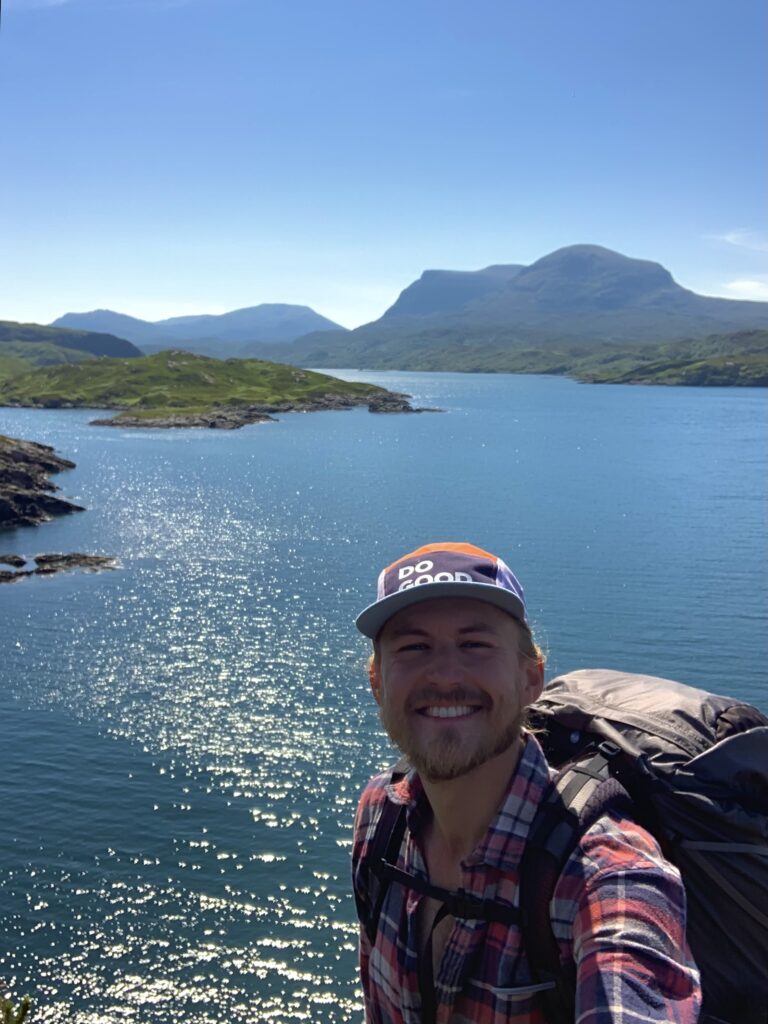
It felt like I couldn’t have moved on without first letting go of the past.
We began talking, slowly at first, until we were talking all day every day. It wasn’t long before we were certain of each other, and to be sure, she came to Glasgow to meet me. We fell completely in love like nothing we had experienced before. It was a love that I didn’t know existed outside of movies. When I finished my walk, I met her daughter, and we all fit together so naturally, like it was always meant to be. I had found the belonging I was searching for. It felt like I couldn’t have moved on without first letting go of the past.
This March, two years after we first met on the coast, Abi and her daughter will be moving in with me to live as a family. It was a stark difference to the man who had set out to walk the coast alone, weighed down by the past he was unwilling to feel. I couldn’t truly be present and connected when so much of me still held onto the past. Not only had I walked around the entire coast of Great Britain and raised money for Mind, but I had become a different person in the process. Like the crenelated labyrinth of coastline I walked, parts of me fell away while other parts of me grew.
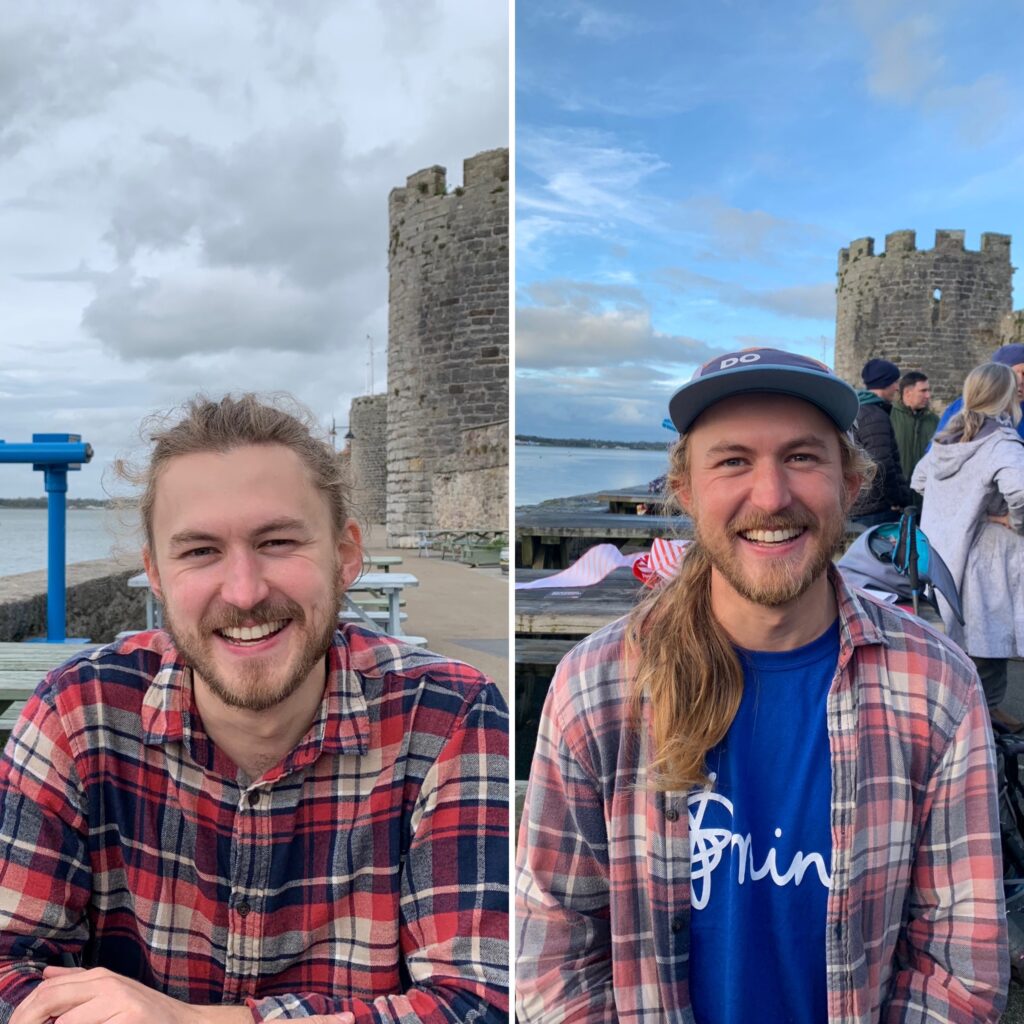
As Carl Jung said, “There is no linear evolution; there is only circumambulation of the self.” And through following my path and meeting everything along the way with openness, I had found the belonging in myself, in others, and in this island I call home.
James shared his story walking the coast of Britain in real time across his Facebook page, which you can view here.
