Our article feature in Living North magazine
In May 2022 Tyneside and Northumberland Mind had the privilege of a feature in Living North, a magazine all about local life from food and drink, lifestyle, events, interior design and so much more.
The feature was aimed at spreading awareness of mental health as part of Stress Awareness Month (April 1st- April 30th). We were thrilled to be given the opportunity to share some important information about mental wellness, help de-stigmatise mental health support and showcase the work we do.
Read on to hear all about our interview with the Living North team discussing all things stress.
To someone that has never heard of Tyneside and Northumberland Mind before, how would you describe it to them?
We’re a local charity working across Tyneside & Northumberland supporting peoples mental health either through delivering groups or one to one support across our range of services or to organisations and their workforces through the delivery of mental health training.
We want everyone with a mental health issue to be in control of their lives and get the support they need from people they trust; we work together to make people and our communities stronger and healthier. We’ve been working in local communities in this way since 1985 when we began as a local self-help group in Blaydon, Gateshead.
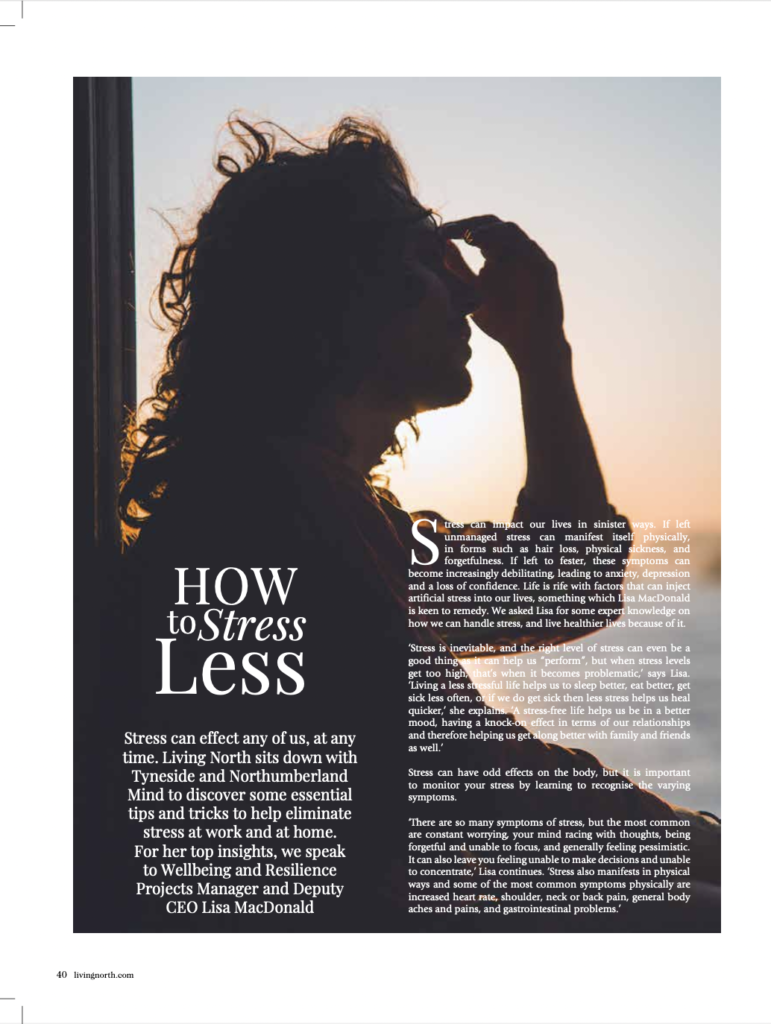
What are the most common symptoms of stress that manifest in ourselves?
There are many symptoms of stress but the most common are constant worrying, your mind racing with thoughts, being forgetful and feeling unable to focus and generally feeling pessimistic and seeing the negative side of things. It can also leave you feeling unable to make decisions and unable to concentrate.
Stress also manifests in physical ways and some of the most common symptoms physically are increased heart rate, shoulder, neck or back pain and general body aches and pains and gastrointestinal problems.
What are the health benefits of living a less stressful life?
Stress is inevitable and in fact, the right level of stress is a good thing as it can help us ‘perform’ but when stress levels get too high, that’s when it becomes problematic.
Living a less stressful life helps us to sleep better, eat better, get sick less often or if we do get sick then we can heal quicker when living a less stressed life. A stress-free life helps us be in a better mood which has a knock-on effect in terms of our relationships and so we get along better with family and friends as well.
How do you personally find ways to relieve yourself of stress?
For me, it’s usually going for a run or to the gym. Exercise is my main stress reliever but I do appreciate that won’t be everyone’s first choice. Other things I do sometimes when I’m stressed might be to take a book to read in a candle lit bath. Having some ‘me time’ to unwind or doing an activity to help distract me from the stressor are my go to stress relievers.
Can you suggest routine activities/changes in one’s daily routine that can help minimise stress over the course of your day/week/month/life?
There are many techniques that we can practice helping better manage stress and it’s just important to find what works for you as we’re all different and enjoy different things. Some activities you could try are taking some time out to relax to take some time to care for yourself. Even if you can devote only five to 15 minutes a few times a day to relax, to take a break from it all.
Getting quality sleep also helps to build us to be more mentally healthy to manage the day ahead.
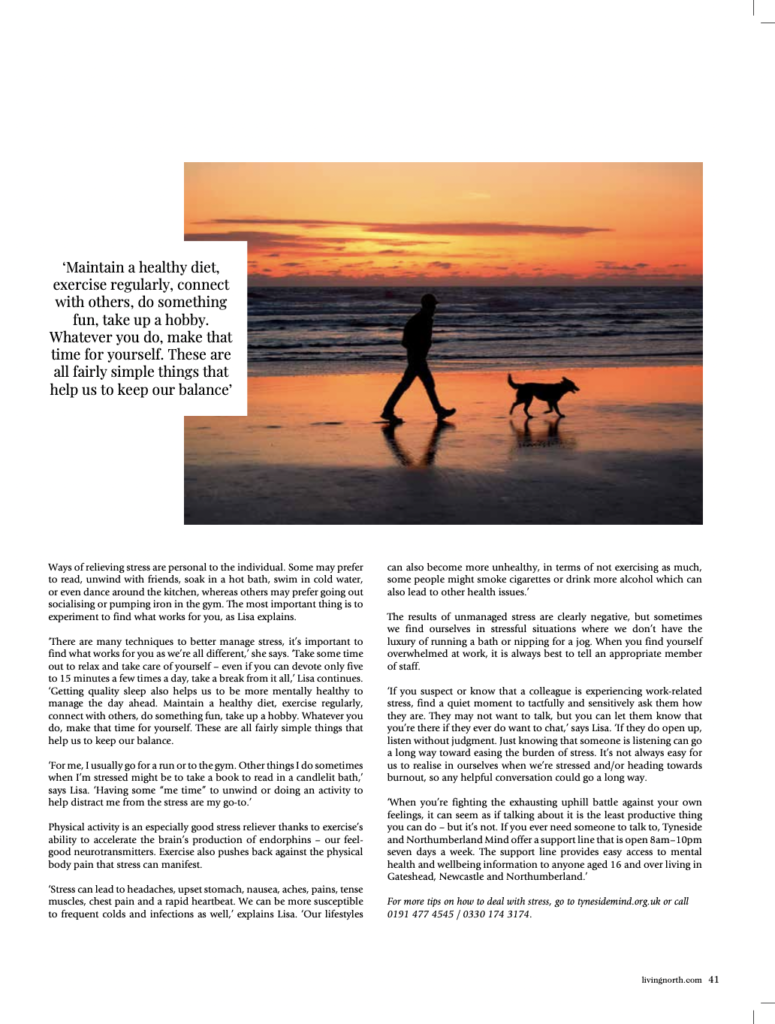
Maintain a healthy diet, exercise regularly, connect with others, do something fun, take up a hobby. Whatever you do, make that time for yourself to continue with your activity. These are all fairly simple things but can be the things that help us to keep our balance, yet we often let go of some of these when stress begins to build within us.
Can you be made physically unwell from mental stress?
We absolutely can, stress can lead to headaches, upset stomach, nausea, aches, pains, and tense muscles, chest pain and rapid heartbeat. We can be more susceptible to frequent colds and infections as well. Our lifestyles can also become more unhealthy in terms of not exercising as much, changes in our diet; either eating more or not eating enough, eating too much unhealthy foods. Some people might smoke cigarettes more, drink more alcohol which can also lead to physical health issues.
How important is diet in reducing stress and looking after your brain?
From a young age, we’re taught that eating well helps us look and feel our physical best. What we’re not always told is that good nutrition also affects our mental health. A healthy, well-balanced diet can help us think clearly and feel more alert, help improve concentration and our attention span.
A poor diet can lead to fatigue, impaired decision-making, and can slow down reaction time. In fact, a poor diet can aggravate, and may even lead to, stress and depression.
When we’re feeling stressed or depressed, it’s often processed foods we reach for in search of a quick pick-me-up. During busy or difficult periods, a cup of strong coffee sometimes replaces a meal and fresh fruits and vegetables replaced with high-fat, high-calorie snacks and fast food.
If someone is stressed at work and worried about telling their senior colleagues about experiencing burnout, how would you suggest the topic is brought up to them?
If you suspect or know that a colleague is experiencing work related stress, find a quiet moment to ask them how they are in private, and be tactful and sensitive. They may not want to talk, in which case you’ll need to respect their privacy but you can let them know that you’re there if they ever do want to chat.
If they do open up, do listen without judgment. Sometimes, just knowing that someone is listening can go a long way toward easing the burden of stress. Encourage your colleague to speak to a senior colleague but if they don’t feel able to, then you could maybe try to have a discreet word with a senior about your concerns and observations. It’s not always easy for us to realise in ourselves when we’re stressed and/or heading towards burnout or feel able to speak to others about it. A private, confidential conversation with our colleagues manager could go a long way. Its good to look out for colleagues and this can be done in a caring, empathic way and should be the approach used in this kind of situation.
How important is talking to one another when communicating experiences of stress?
Talking can be a way to cope with how we’re feeling, especially if you’ve been carrying around in your head for a while. Just being listened to can help you feel supported and less alone. And it works both ways. If you open up, it might encourage others to do the same. When you’re fighting the exhausting uphill battle against your own feelings, it can seem as if talking about it is the least productive thing you can do but it’s not.
If you ever need someone to talk to them we offer a support line that is open 8am-10pm 7 days a week. The support line provides easy access to mental health and wellbeing information to all aged 16 and over living in Newcastle, Northumberland and Gateshead. You can access it by calling – 0191 477 4545 or 0330 174 3174(Calls are charged at local rate)
Can you recall a time from personal-experience where a stress-relieving tip improved your mental health?
Always! My go to is running, running for me is an amazing stress reliever but I will often feel like it’s the last thing I want to do when I’m feeling stressed. Sometimes it’ll be my partner who will notice and suggest I get my running shoes on and go so I push myself and always feel better for it! That half hour run or however long I choose to go for, gives my overactive mind, a time to clear and rebalance.
The May edition of Living North will be available to buy in shops this month and online in June 2022 here.
